

Dzibilchaltun which in the Mayan language means (The place where there is writing on the stones)
In allusion to the numerous commemorative tombstones found at the site, also called “stelae”.
It is located at Km 14 of the Mérida, Progreso highway and 52 km from the archaeological site of X-cambo, where they obtained salt, a basic product in their trade.
The settlement covered about 19 km2 being of concentric type, in which around 8,400 structures have been found, the central part is composed of numerous monumental constructions that cover about 25 hectares. In the rest of the area there are scattered architectural ensembles with pyramids and vaulted buildings. It is believed that it may have reached a population of up to 40,000, making it one of the largest ancient cities in Mesoamerica.
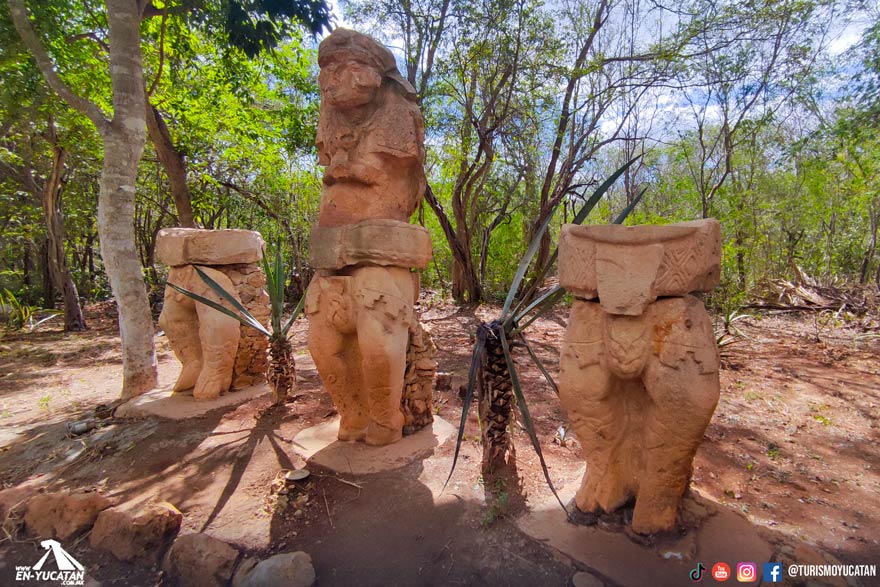
Apart from the stelae, where the number 19 stands out, which is considered a masterpiece of Mayan sculptural art, the "true masonry" stands out. (Stones joined with mortar and wedges) as well as the vaults built with the projecting stone system.
Structures and Temples
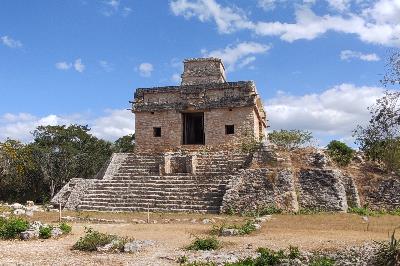
Temple of the 7 Dolls
The main structure is known as “Templo de las 7 Muñecas” or “Templo del Sol”, which is a quadrangular substructure of what was once a monumental temple and in which a solar phenomenon can be observed
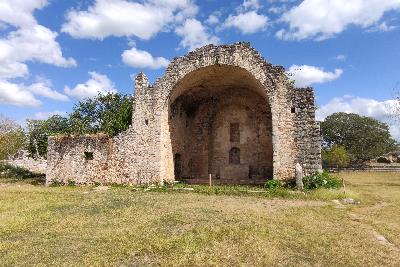
Capilla Abierta
The construction of the chapel can be dated between 1590 and 1600, its location within the Central Plaza suggests that important ceremonies were held in this space since pre-Hispanic times
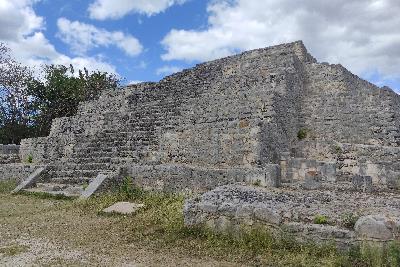
Structure 36
It is a partially liberated pyramid composed of four square and stepped platforms 9.40 m high with an access staircase to the south and towards the central plaza
Adjacent Rooms
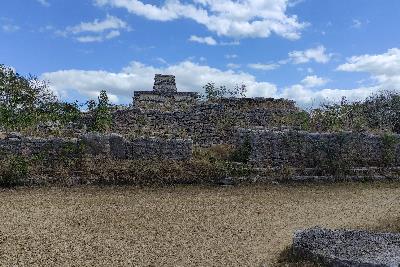
In front of the temple of the 7 dolls towards the west there are three rooms with a double bay (4 to 9) and a single room (10) all of them on smaller platforms
Cenote Xlacah
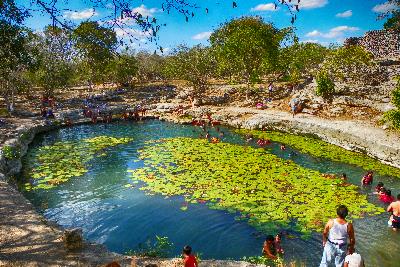
On the other side, finishing off the central plaza on its western side, is the Xlacah cenote (Old Town), one of the largest and deepest found to date in Yucatan. A large number of archaeological pieces have been rescued
Museum of the Mayan People
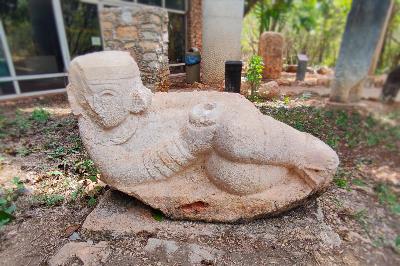
It houses around 700 pieces that show the life that the Mayan ancestors had, complementing the constructions found on the site.